EN


Best Postage Scales for Home and Small Businesses
A postage scale earns its place at a shipping desk by making one small decision easier: can this parcel be weighed, labeled, and handed off without interrupting the rest of the day? For a home seller, that may mean a few padded envelopes after work. For a small business, it may mean a stream of cartons at a packing bench. The right postage scale is therefore less about a single headline specification and more about whether its platform, capacity, display, and power setup match the parcels you actually send.
Start with the job, not the feature list. A compact postage scale can be sensible for light mailers and small boxes; a larger platform can be more practical when cartons hide the display. That distinction matters. A higher capacity does not automatically make a postage scale easier to use for every shipment.
Begin with a one-week parcel snapshot
Before comparing a postage scale, collect a representative week of outgoing packages. Note the lightest and heaviest items, the largest box footprint, the shipping frequency, and whether someone needs to read the display while holding a carton. This quick snapshot turns vague shopping terms into useful requirements.
- Home shipping: List the envelopes, small parcels, and occasional returns you send.
- Small-business shipping: Include peak-day volume, common carton sizes, and the heaviest packed order rather than the empty-box weight.
- Mixed workflows: Include tubes, irregular parcels, and containers that may overhang the platform.
A postage scale should cover the real upper end of that range with room for normal variation. If the heaviest parcel sits right at the stated limit, routine use can become awkward. On the other hand, selecting an oversized postage scale for very light mailers may sacrifice counter space without improving the workflow.
Capacity and displayed increment answer different questions
Capacity tells you the largest load a postage scale is intended to weigh. Displayed increment tells you how finely the reading changes. Both belong in a comparison, but they solve different problems. A seller shipping lightweight accessories may care about small changes in reading, while a seller shipping bundled goods may need more capacity and a stable platform.
Do not treat a displayed increment as a blanket accuracy promise. Read the manual for operating conditions, warm-up guidance, and any stated tolerance information. Place the postage scale on a firm, level surface, keep the load centered where practical, and allow the reading to settle before entering it into a shipping system. These habits are often as important as the number printed on a product listing.
Choose a platform that fits the carton, not just the number
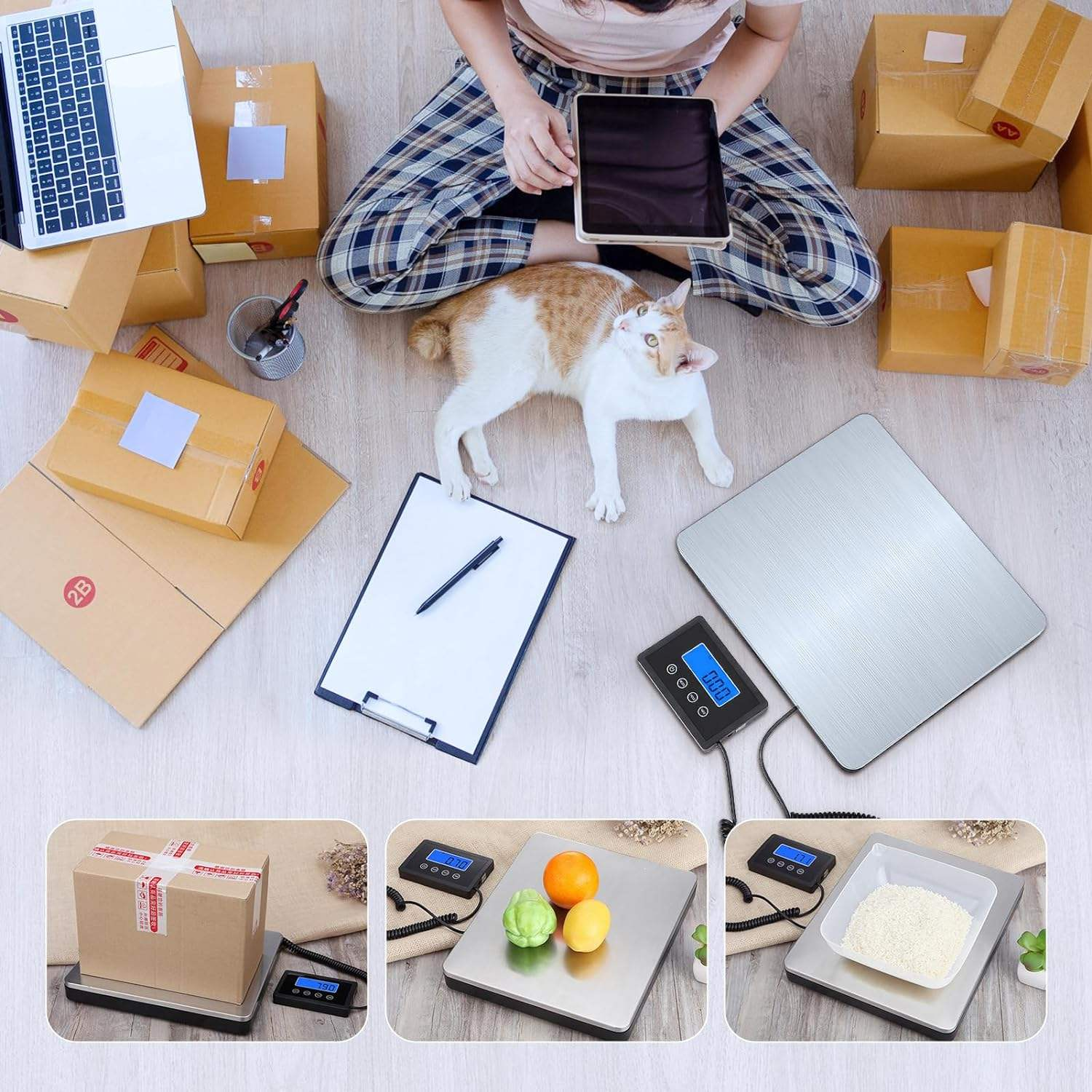
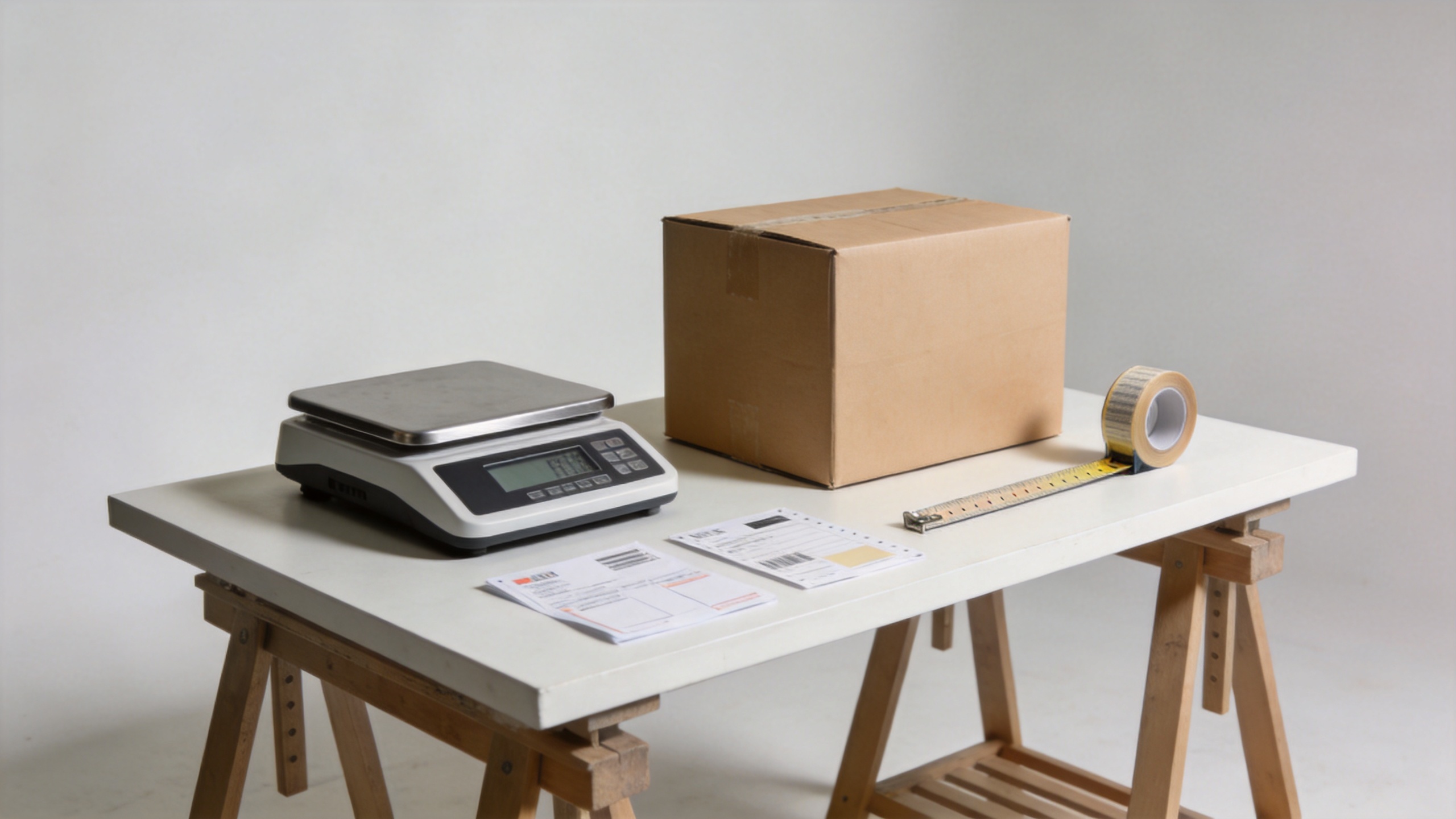
A postage scale can have sufficient capacity and still be frustrating if a broad box covers the display. Consider three physical checks: platform dimensions, display position, and how the parcel rests during weighing. A detachable or remote display may help at a crowded packing station. A larger, stable platform may be worth the footprint when boxes are frequent.
For dimensional workflows, the scale is only one part of the measurement process. Current postal-service guidance explains that parcel pricing can involve dimensions as well as actual weight, and it defines length plus girth for applicable services. Confirm current shipping-service rules before setting up a process, because thresholds and pricing methods may change. The practical point is simple: leave room near the postage scale to measure the box as well as weigh it.
Features that reduce routine shipping friction
Useful features should shorten a repeated action, not just expand a checklist. When comparing a postage scale, test each option against the way labels are created in your workspace.
| Feature | Why it matters | Question to ask |
|---|---|---|
| Tare | Lets you weigh contents in a container after zeroing its weight. | Will you regularly use bins, trays, or mailers during packing? |
| Hold | Keeps a settled reading visible when a large parcel blocks the screen. | Do cartons frequently cover the display? |
| Unit selection | Supports the units used by your shipping software and team. | Which unit do you enter or verify most often? |
| Power options | Affects where the scale can live and how it is used during busy periods. | Is a nearby outlet available, and is portability needed? |
| Connection options | May support a digital shipping station when compatibility is confirmed. | Does the exact model work with your current hardware and software? |
Tare is helpful for a container, but it is not a substitute for stable placement or a confirmed reading. Likewise, a hold function can make a covered display easier to manage, yet staff should still verify the displayed value before buying a label.
Match the postage scale to your shipping setting
For occasional home mailings
Prioritize a postage scale that stores easily, has controls you can understand without a setup ritual, and accommodates your usual parcel size. If you ship only a few lightweight packages each month, a compact format may be appropriate. Test it with a filled box rather than an empty envelope before deciding.
For a small online shop
Look for a postage scale with a platform and display arrangement that work at the packing bench. Repeatability matters more than novelty: the operator should be able to place a parcel, wait for a stable result, record it, and move on without rearranging the station. A second scale can also be useful where one person packs while another creates labels, but only after the workflow proves that it removes a bottleneck.
For larger or irregular cartons
Focus on usable platform space, capacity headroom, and a readable display. A carton that overhangs a postage scale is not automatically a problem, but it can conceal the result or make placement less stable. A remote display or a deliberate weighing procedure may address that issue. Confirm the exact configuration before purchase.
Run a realistic pre-purchase test
If a sample or demonstration is available, use it as a small shipping rehearsal. Place the postage scale where it would live, weigh a light mailer, a common parcel, and a heavier packed carton, then try the tare and hold functions with the same materials your team uses. Check whether the display remains visible and whether the platform feels stable. This is more informative than comparing numbers in isolation.
For businesses buying from a supplier, provide the anticipated weight range, carton footprint, units, intended market, power preference, and any integration requirement. Shenzhen ACCT Electronics identifies postal scales among its scale categories and can use those questions to guide a configuration discussion; exact model specifications and compatibility should be confirmed in current product documentation.
A practical selection checklist
- Record actual parcel weights and box footprints for a representative week.
- Set a capacity range with routine headroom rather than choosing by the maximum label alone.
- Check whether the display will remain readable behind your common cartons.
- Decide which repeated features—tare, hold, units, power, or connectivity—serve the actual workflow.
- Verify current shipping-service requirements and the exact model documentation before committing.
A suitable postage scale supports repeatable shipping decisions at the pace you need. Start with the parcels on your bench, check the physical setup, and validate the exact configuration against your label process. That approach keeps a simple weighing tool aligned with a practical home or small-business routine.