EN
EN



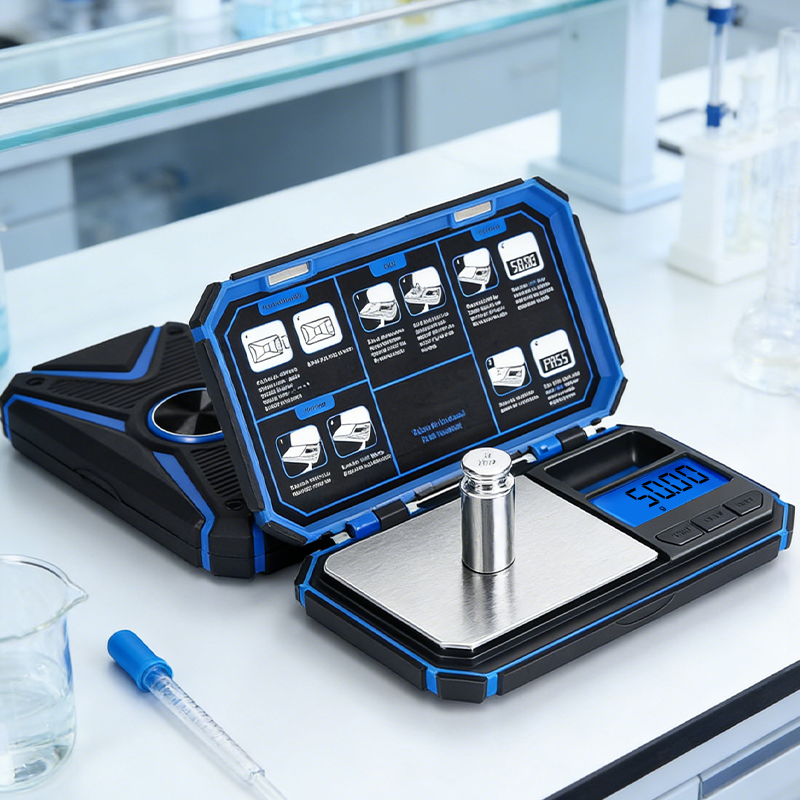
When dealing with diamonds, gemstones, or gold, having a jewelry scale that reads down to 0.001 grams makes all the difference. Tiny changes in weight affect how pure these materials appear and what they're worth on the market. Just think about it: if someone mistakes 0.01 grams when weighing gold, this small mistake could cost over $740,000 each year for big traders according to research by Ponemon Institute back in 2023. That's why professionals need such accurate scales. Most jewelers follow guidelines set by groups like GIA and World Gold Council, both of whom demand measurements precise enough to catch even fractions of a milligram during their evaluations and transactions.
Switching back and forth between carats, grams, and troy ounces isn't just convenient but actually essential when valuing precious items accurately. Gemstones are priced per carat while bullion uses troy ounces, so getting these units right matters a lot. When people mix up the measurements, it creates all sorts of problems down the line. According to research from a major scale company, nearly 4 out of 10 financial disagreements about appraisals come from simple mistakes in converting between different measurement systems during either inputting information or generating reports. Having a system where units can be changed with one click removes those pesky calculation errors and makes sure records stay clean and ready for any audits that might happen later on.
When we talk about tiny measurement errors below one gram, these problems don't just sit there by themselves. They actually grow bigger as the number of items increases and as profit margins get tighter. Take diamonds for instance. If each stone has a small error of 0.005 grams, over 1,000 stones this adds up to a full 5 grams worth of loss. At current market prices around $5,000 per gram, that means roughly $25,000 disappears from the bottom line. And things get really interesting when looking at those fancy colored gemstones that can fetch anywhere between $50k and $200k per carat. Even a minuscule mistake of just 0.001 grams can wipe out almost all the profit margin on individual pieces. That's why serious jewelers invest in proper calibration equipment certified by NIST standards. It's not some extra expense people can afford to skip. Getting accurate measurements right from the start protects both the business finances and maintains customer confidence in what they're buying.
True precision emerges from the balance of readability, capacity, and calibration— not any single spec in isolation. While 0.001g readability is critical for diamonds (e.g., distinguishing 1.005g from 1.006g—a potential 5% value shift at $5,000/ct), it’s only viable within appropriate capacity ranges:
Higher capacity often trades off readability, making strategic calibration indispensable. Certified test weights correct for mechanical drift, and industry data shows uncalibrated scales accrue up to 0.3% error monthly—equivalent to $1,500 in exposure against a $500k gold inventory.
Over 90% of real-world weighing errors stem from environmental interference—not instrument failure. Modern jewelry scales mitigate this through integrated safeguards:
In a controlled 2023 metallurgy lab test, scales equipped with all three features maintained â¤0.002g deviation under simulated workshop conditions. By contrast, basic models drifted by 0.08g—enough to misprice a 5ct emerald by $800 based on current wholesale benchmarks.
Picking out the right jewelry scale comes down to making sure what's technically possible actually works in practice. For gemologists looking at loose diamonds, they absolutely need those analytical balances that read down to 0.001 grams plus those draft shields around them too. Without these basics, no way to meet GIA standards when grading stones. Pawn shops and gold refiners deal with bigger volumes so their main concerns are Legal-for-Trade certification and scales that can handle weights like 500 grams with 0.01 gram precision. This keeps them compliant with regulations and maintains good workflow speeds. Appraisers who move between locations appreciate smaller, battery operated models with features like automatic taring and multiple unit measurements. Jewelers working in studios want equipment that stands up to vibrations and switches easily between carats, grams, and troy ounces depending on what job they're doing. The environment really matters too when choosing hardware. Retail stores often need those protective shields against drafts, workshop setups might require isolated bases to prevent interference, and places with dust or moisture should go for scales with proper IP ratings. Don't dismiss a 0.01 gram error either. Multiply that tiny mistake by 100 weighings each day at today's gold prices, and suddenly we're talking about potential losses of around $1,000 per month just from small inaccuracies adding up over time.
When dealing with precious items like gold, diamonds, or other gemstones for things like setting prices, insurance claims, or future resale, businesses must use jewelry scales that have been officially certified by recognized metrology organizations. These include the National Measurement Institute in Australia, the European Commission across EU countries, and similar regulatory bodies around the world. The certification process ensures these scales meet very specific accuracy standards, usually within plus or minus 0.001 grams for smaller devices, and also verifies they're built with security features that prevent tampering, such as sealed calibration systems. Without proper certification, any valuation becomes legally questionable, which can actually void important documents ranging from sales agreements to insurance payouts and even tax records. Scales need to be professionally recalibrated every year at an approved metrology lab to keep their certification valid. Good practice also involves keeping detailed records of all calibrations, placing the equipment on solid, level surfaces where temperature changes and vibrations won't affect readings, and running daily zero point checks especially before making expensive appraisals.
Shenzhen ACCT Electronics provides professional OEM/ODM electronic scales (pocket, kitchen, bathroom, postal) for global B2B clients. 20+ years’ experience, ISO9001 & CE/RoHS certified, 8M pcs/year capacity. Trusted by EU & NA partners. Request quote today.