EN


Portable Gram Scale Assessment: Which Fits Your Needs?
A portable gram scale is useful when the question is not simply “Which model is smallest?” but “What must this scale reliably help me weigh?” From a portable-scale product specialist’s perspective, the useful answer starts with the item, the setting, and the way the scale will travel. A portable gram scale can suit small parts, ingredients, coffee, jewelry-sized items, or sample checks, provided its capacity, displayed increment, and operating conditions match the job.
That is the starting point. The next question is whether you need a portable gram scale for detailed light items, a broader-capacity household task, or a travel workflow. The same compact format will not automatically fit all three.
Start With the Item and the Place of Use
Before comparing a portable gram scale, write down the heaviest item you expect to weigh, the smallest change you need to see, and where the scale will sit. A portable gram scale used for tiny craft components faces a different requirement from one used for food portions or packaged samples. Item size matters as well: an object can fall within the rated load yet still be awkward to place on a small platform.
Travel and storage deserve their own check. A portable gram scale may be compact enough for a drawer, kit, or bag, but protective storage, button protection, screen visibility, and a stable operating surface can matter more than the outside dimensions. Portable does not automatically mean suitable for every task; the item weight and handling method still matter.
Separate Capacity From Displayed Increment
Capacity tells you the maximum load a portable gram scale is designed to accept. Displayed increment, often called readability, tells you the smallest step the display shows. They are related selection details, but they do not mean the same thing. A portable gram scale with a higher capacity may show larger increments, while a lower-capacity option may be intended for more detailed readings.
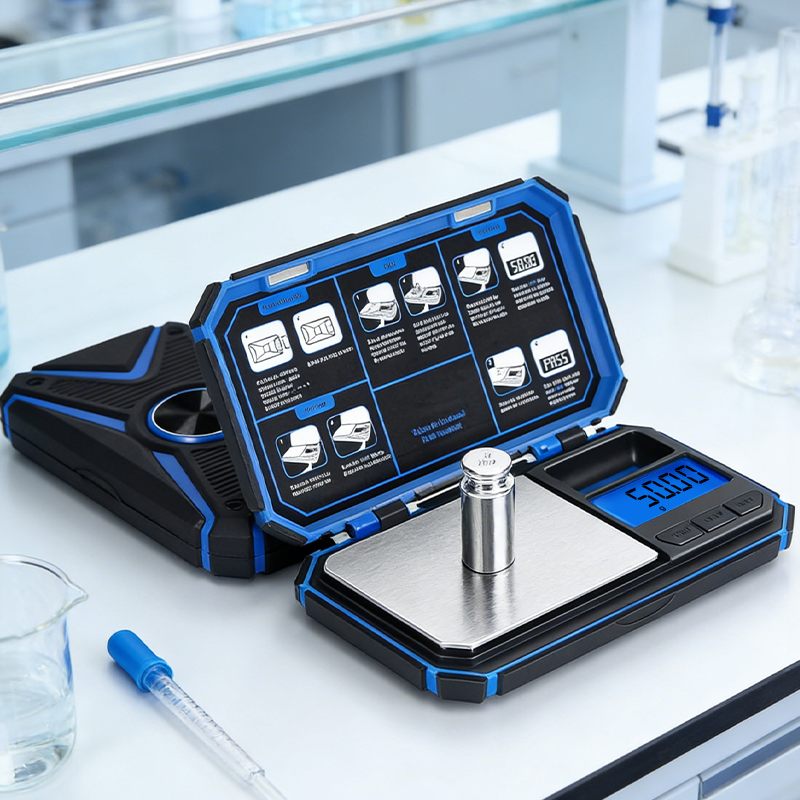
Representative market listings illustrate the trade-off rather than a universal rule: one pocket-scale example pairs a 70 g capacity with a 0.01 g displayed increment, while another pairs 1000 g with 0.1 g increments. Those figures are examples, not a recommendation or a performance guarantee. For any portable gram scale, confirm the exact model specification and the conditions under which it is intended to be used.
| Decision question | Why it matters | What to verify |
|---|---|---|
| What is the heaviest item? | It sets the minimum useful capacity. | Rated capacity and the size of the weighing platform. |
| How small a change must be visible? | It guides the displayed increment you need. | Displayed increment, unit options, and model documentation. |
| Where will it be used? | Portable use can introduce uneven or temporary surfaces. | Stable placement, display angle, protection, and storage needs. |
Match the Portable Gram Scale to the Workflow
Small items and detailed portions
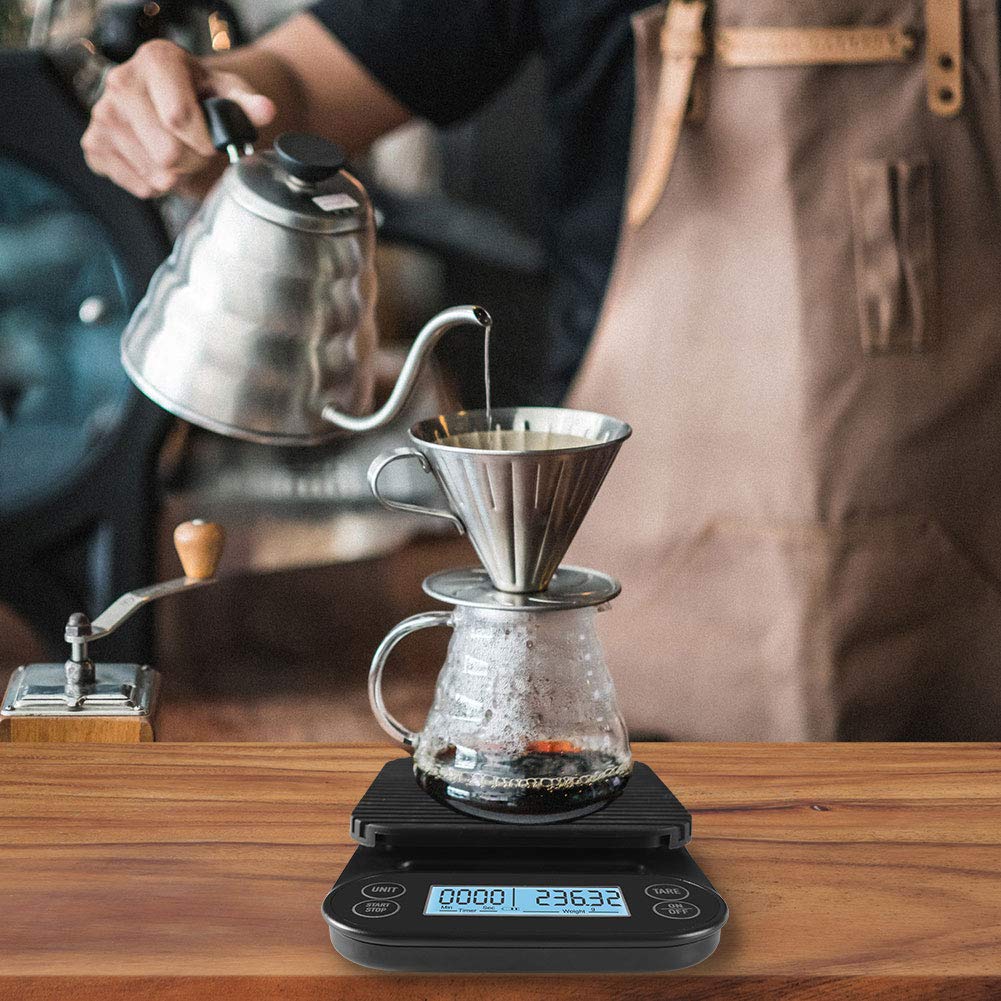
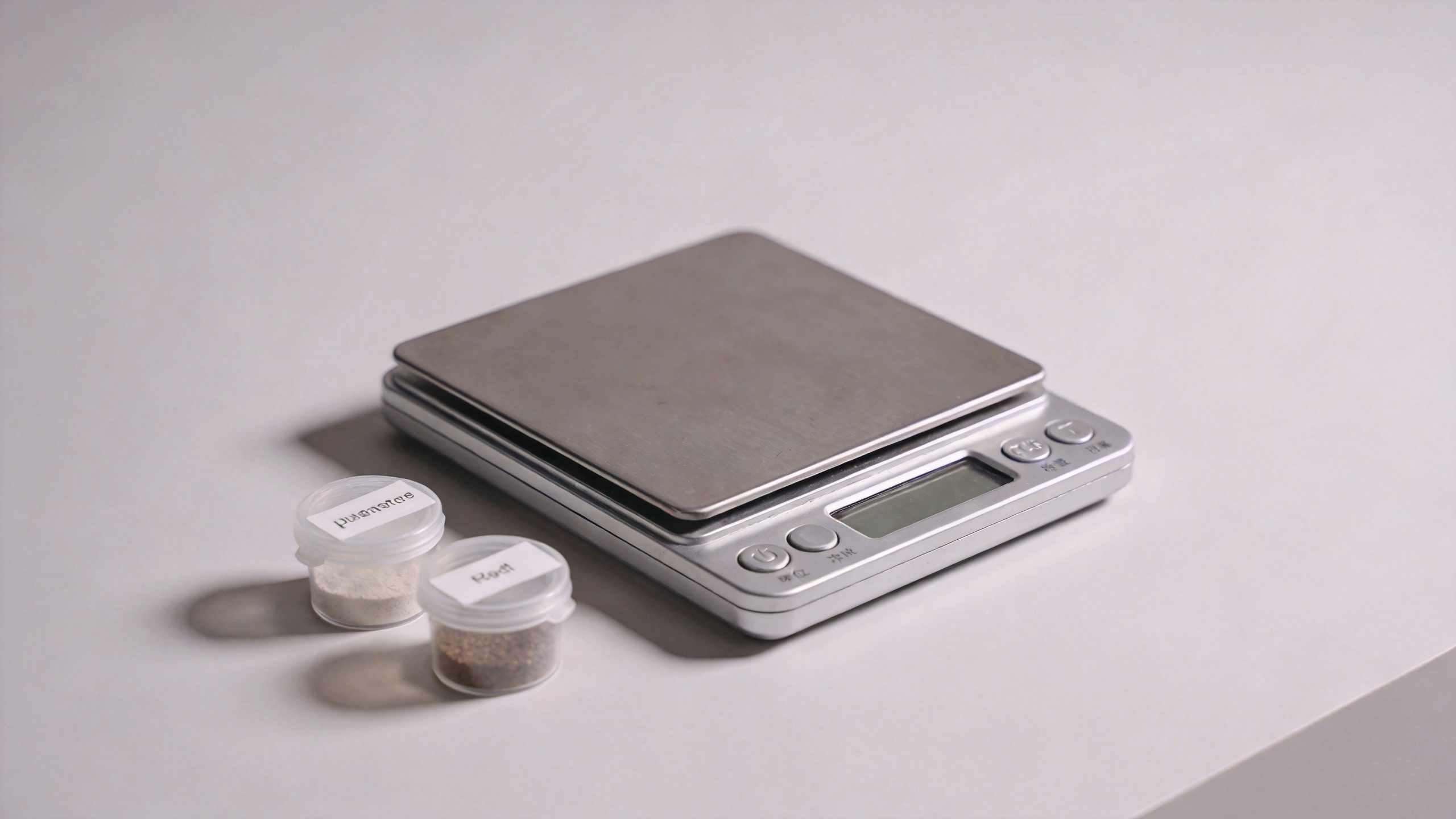
For jewelry-sized items, small components, coffee, or carefully measured ingredients, a portable gram scale should be assessed around the expected weight range and the displayed increment that makes the result useful. Keep the device on a firm, level surface and make sure the platform can hold the item or its container without crowding the display. If a container is necessary, tare can simplify the workflow: place the empty container, reset the displayed weight, add the item, and wait for the reading to settle.
Food and routine household use
A portable gram scale can be convenient for portions and recipe preparation when the required capacity, platform area, and unit choices fit the ingredients. Do not assume a compact pocket format replaces a larger kitchen scale for bowls, bulk ingredients, or wide containers. If the scale is used on a stable surface for small portions, the reading is easier to interpret. Check the unit before adding ingredients; it prevents a simple but common mix-up.
Travel and mobile work
For a portable gram scale carried between locations, look beyond the word “portable.” Consider whether the unit has a protected storage arrangement, whether the screen can be read in the expected posture, and whether you will have a stable place to set it down. A pocket-sized platform scale and a hanging luggage scale solve different problems. If the task is baggage weighing, a hanging workflow may be more relevant than a portable gram scale.
Use Features as Questions, Not as a Checklist
Features such as tare, unit conversion, a backlit display, protective covers, and automatic shutoff can be useful, but only when they support the actual workflow. Ask what each feature changes in practice. Will tare be used with a container? Do the required units match the market and application? Will the display remain legible where the portable gram scale is used? Is protective storage important because the scale is carried with tools or samples?
Be equally careful with broad precision language. A fine displayed increment is not a blanket accuracy promise. Repeatable setup, stable placement, clean contact surfaces, correct units, and an appropriate load all affect how a reading should be interpreted. It may be worth confirming configuration details, calibration guidance, and model-specific documentation with the supplier before treating any portable gram scale as a final match.
A Practical Pre-Purchase Test
- Choose a representative item close to the normal working range, not only the lightest possible item.
- Place the portable gram scale on the type of stable surface available in real use.
- Confirm the selected unit and, when needed, tare the empty container.
- Place the item centrally, allow the display to settle, and repeat the normal handling sequence.
- Review whether the platform, display, capacity, and displayed increment support the decision you need to make.
This process does not replace formal verification where it is required. It does help reveal whether the portable gram scale fits the intended workflow before a larger purchase, private-label inquiry, or configuration discussion.
Questions to Bring to a Supplier
For a business purchase or OEM/ODM discussion, compare like for like. Share the intended product use, target weight range, preferred units, expected operating environment, platform needs, packaging expectations, and target market. Shenzhen ACCT Electronics positions its electronic-scale offering around OEM/ODM conversations and pocket-scale categories, so a requirement-led inquiry is more useful than requesting a generic “high precision” option. Ask for current model-specific specifications and applicable documentation before finalizing a configuration.
Choose by Fit, Then Verify the Details
In short, choose a portable gram scale around the job you need it to do. Start with the item and setting, distinguish capacity from displayed increment, then assess portability, units, tare, screen visibility, and storage. The right portable gram scale is not necessarily the smallest or the one with the most ambitious wording. It is the one whose documented configuration supports your actual task and the conditions in which you will use it.