EN



A jewelry weighing scale sets the price the moment a stone hits the pan. Gold trades by the gram and diamonds by the carat, so a reading that slips by a fraction changes the money on the table. The right jewelry weighing scale reads fine, holds steady, and carries a certificate a buyer can trust when the deal is struck at the counter with a customer who checks the number on a phone app. The display must read fine enough that a fraction of a carat shows, and the pan should sit still while the cell works. A unit that meets those points protects both the margin and the trust the shop builds with each sale.
A jeweler used a scale that showed 0.01 g and rounded a 0.5 carat stone down on the display. The customer pulled a phone app with finer steps and walked. A jewelry weighing scale with 0.001 g readability showed the true mass and the sale closed, because the number matched what the buyer expected. The shop now keeps a jewelry weighing scale with a draft shield on every counter where gold changes hands during the day and the light shifts.
A pawn buyer weighed coins and could not show proof of the reading to the seller. A jewelry weighing scale with a printable or logged result gave the seller a slip, which ended the arguments and kept the counter within the local trade rules that require a record. The buyer now weighs every lot on a jewelry weighing scale that logs the mass, so a dispute never reaches the door or the office down the hall of the shop during a busy afternoon.
A scale left in the case and warmed by the lamp drifts as the cell heats through the afternoon. A jewelry weighing scale that is not allowed to settle reads low, and the shop pays out on a number that the heat quietly changed. The clerk now lets the jewelry weighing scale sit ten minutes before the first weigh, because a rushed reading on a warm cell costs more than the minute it takes to wait for the pan to steady under the stone.
Dry air builds static that tugs the pan and fools the cell. A jewelry weighing scale without a grounded pan or a draught shield shows jumps the jeweler cannot explain, and a stone priced on a bouncing reading risks both the margin and the trust. The bench now runs a jewelry weighing scale with an ionizer in the shield, so the pan settles and the price the shop quotes stays fair to the buyer at the counter who watches the read.
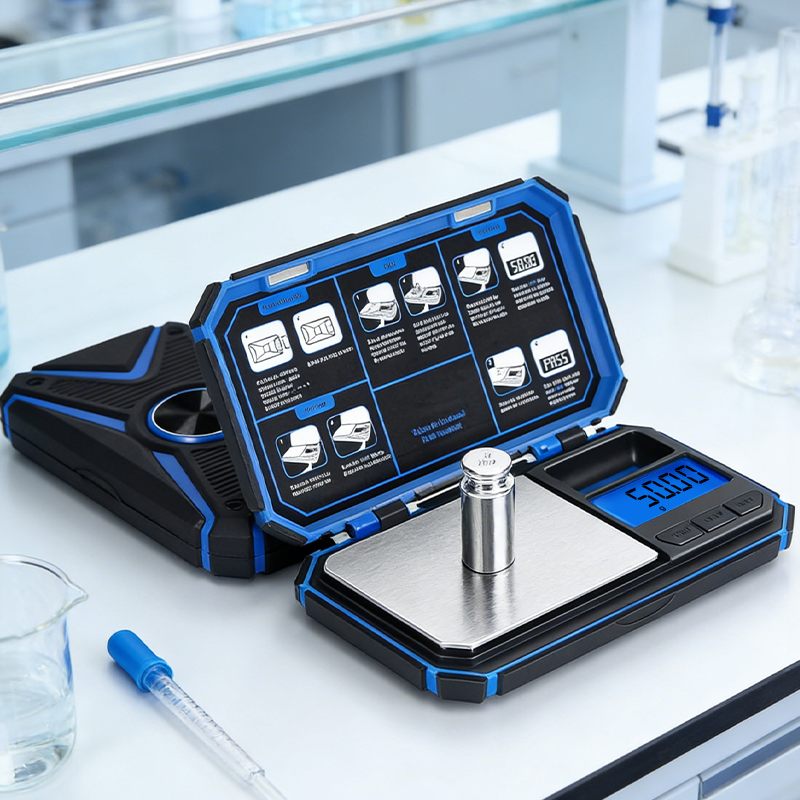
A jewelry weighing scale uses a fine load cell sealed behind a glass shield that blocks air. The shield keeps the pan still while the cell reads the tiny force, so a 0.1 g stone shows the same value on the third try as the first. Calibration sets zero and the upper point with a traceable mass. A jewelry weighing scale checked with a 50 g or 100 g class weight stays honest, while one never calibrated prints a confident number that slowly wanders off the true mass and costs the shop on every loose stone sold by the gram.
A maker under ISO 9001 tests each unit before it ships, and OIML R76 classes the allowed error by load on the pan. A jewelry weighing scale with that class tells the buyer the tolerance up front, so a price rests on a rule, not a promise on the box. In the United States, a scale used to sell gold must meet NIST Handbook 44. A jewelry weighing scale with that approval lets a shop charge by weight under inspection, while a lab-only unit serves the bench but not the public counter where the sale is made to a stranger.
Match readability to the stock: 0.001 g for loose stones, 0.01 g for scrap and coins. A jewelry weighing scale with a draft shield, a leveling foot, and a calibration weight in the box saves the buyer a second order and gets the bench running the same day. Weigh a class weight each time the shop opens. A jewelry weighing scale that holds the mark is ready, and one that drifts needs recalibration before the first customer, not after a dispute over price that the clerk cannot defend with a steady reading on the pan.
Brush the pan, keep liquid away, and store in a closed case off the bench. A jewelry weighing scale kept dry and level holds its zero, and the jeweler avoids the static and drift that a dusty, sunny bench brings to the reading during a long day. A buyer should also confirm the battery format, since a tool on a common cell stays cheap to keep alive through a long season of use at the counter. A supplier such as ACWeights offers jewelry weighing scale models with OIML class, draft shield, and calibration weight listed, so the shop picks the precision that fits the stock before checkout and the unit arrives ready to weigh the first stone that walks in the door of the store on a weekday.
Answer: Gold and scrap trade by the gram, so 0.01 g readability suits most counters, while loose stones want 0.001 g for a fair quote. A jewelry weighing scale with the finer step shows a fraction of a carat the buyer can verify on a phone. The shop picks the step to the stock it prices each day on the bench where the sale is made to the customer who checks the number on a device.
Answer: Air moves the pan and the reading jumps, which risks both price and trust with the customer. A jewelry weighing scale with a glass draft shield blocks the breeze and holds the pan still while the cell reads. The jeweler closes the shield, waits a beat, and gets the same number on repeat tries without a doubt raised by a gust at the counter that moves the pan and the stone on it.
Answer: Good units ship a class weight for zero and span checks at the bench. A jewelry weighing scale without one forces a second order and leaves the shop guessing at the true mass. The buyer confirms the weight rating matches the pan and recalibrates on a known mass each open to stay within the trade tolerance allowed by the local inspector who visits the store and tests the tools on site during the year.
Answer: Only with NIST Handbook 44 or the local trade approval for the region. A jewelry weighing scale with that mark lets a shop charge by weight under inspection, while a lab unit serves the bench only. The owner checks the local rule before pricing at the counter to avoid a failed visit from the inspector who tests the scales and the slips that the shop prints for the public each day.
Answer: Dry air builds charge that tugs the pan and makes the number bounce on the display. A jewelry weighing scale with a grounded pan or an ionizer settles fast, while a bare unit needs a touch to discharge. The jeweler weights in a humid room or uses the shield to cut the jumps that confuse the read and the customer who watches the pan at the counter during a dry winter.
Answer: Liquid on the pan, dust in the joint, and drops onto a hard case. A jewelry weighing scale kept dry, level, and closed holds its zero and the cell stays true for the long run. The shop brushes the pan, stores it in its case, and recalibrates after any knock to keep the price honest for the buyer at the counter who pays by the gram for the gold.

Shenzhen ACCT Electronics provides professional OEM/ODM electronic scales (pocket, kitchen, bathroom, postal) for global B2B clients. 20+ years’ experience, ISO9001 & CE/RoHS certified, 8M pcs/year capacity. Trusted by EU & NA partners. Request quote today.