EN



 ×
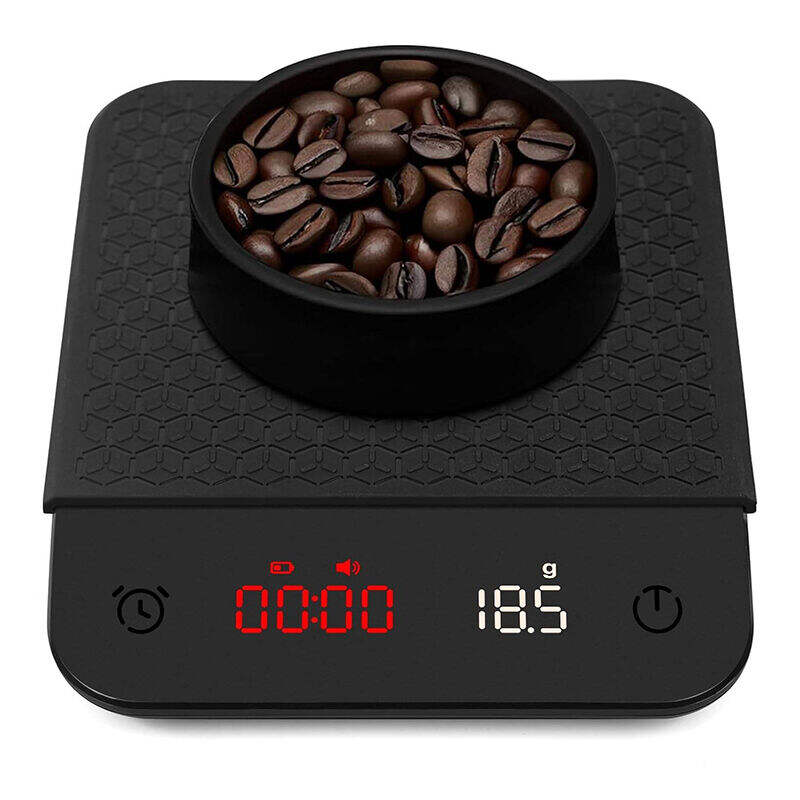
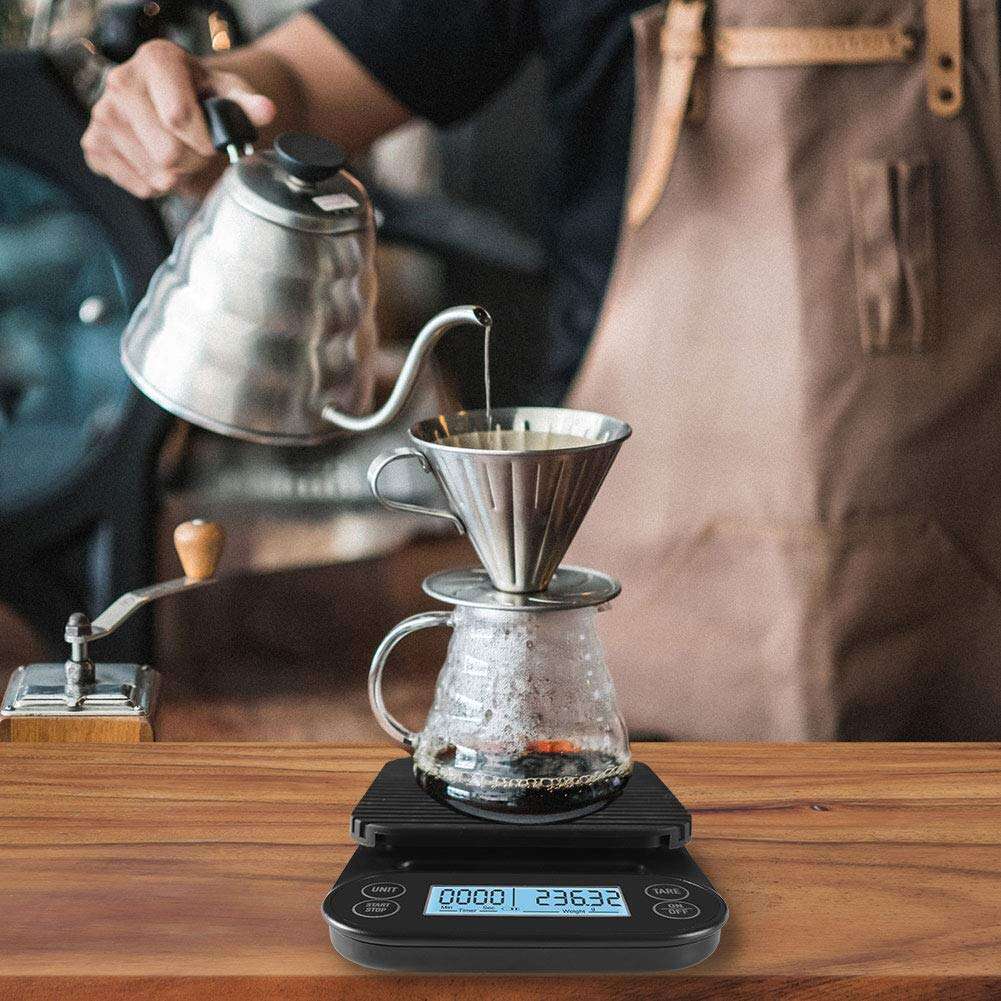
A scale reading 18.0 g when the actual dose is 18.4 g produces a 2.2% ratio error — enough to shift espresso from balanced to over-extracted. The best coffee scale for professional use starts with 0.1 g resolution across 500 g to 2,000 g. Refresh rate determines whether the barista stops at target or overshoots by 1 to 2 grams. Below 100 ms introduces lag; below 50 ms is real-time. Baristas at 60 to 120 shots per hour need accuracy at speed.
The best coffee scale for espresso differentiates on two parameters most listings omit. First, load cell linearity — deviation from true weight across the range. ±0.1 g at 500 g may drift to ±0.5 g at 2,000 g, acceptable for pour-over but not espresso dosing. Second, temperature compensation — maintaining calibration when a hot cup at 85°C sits on the platform. Load cells without active compensation drift 0.3 to 0.8 g as the platform warms. A scale advertising 0.1 g accuracy that drifts 0.5 g under a hot cup is not accurate where it matters.
A specialty coffee chain with 12 locations in the Pacific Northwest was experiencing shot-to-shot inconsistency — baristas across different stores produced the same recipe with yield variance of ±3 g despite using the same grinder model and dose setting. Investigation revealed the chain had purchased three different scale models across its locations, and two of the three models exhibited refresh rates above 150 ms, causing baristas to overshoot target yield by 1.5 to 2.5 g per shot. The chain standardized on a single best coffee scale model supplied by ACWEIGH (Shenzhen ACCT Electronics), a scale manufacturer producing 8 million units annually since 2003 with ISO 2008 certification and CE/RoHS compliance. The selected scale offered 0.1 g resolution, sub-50 ms refresh rate, active temperature compensation, and an integrated shot timer that auto-started on first weight detection. After standardization, inter-store yield variance dropped to under ±0.8 g. Customer complaints about "bitter" or "sour" espresso decreased by 41% in the first quarter.
The best coffee scale for commercial use integrates four features that kitchen scales omit. A built-in timer that auto-starts on first weight detection eliminates the need for the barista to press a separate timer — one less motion in a workflow already demanding simultaneous grinding, tamping, and milk steaming. Auto-tare with cup-on detection zeros the scale automatically when a vessel is placed, saving 1.5 seconds per shot — 3 minutes saved per hour at 120 shots. Water resistance rated at IPX4 or higher prevents scale failure from the inevitable splash, drip, and portafilter rinse water that accumulates on a busy bar. A USB-C rechargeable battery with 20 to 30 hours of runtime eliminates disposable battery changes and the associated downtime.
A café making 200 shots daily subjects a scale to 72,000 weighing cycles per year, plus impacts, spills, and cleaning chemical exposure. The best coffee scale for this environment uses a strain-gauge load cell with overload protection — a mechanical stop that prevents the load cell from permanent deformation if a barista accidentally leans on the platform. The weighing platform should be a single-piece stainless steel plate, not plastic, because coffee oils and cleaning solutions degrade plastic surfaces over 6 to 12 months. Silicone-sealed button covers and edge gaskets prevent liquid ingress into the electronics cavity. Calibration drift under 0.1 g per 10,000 cycles indicates a quality load cell; drift above 0.3 g indicates one that will require monthly recalibration.
A café chain buying 50 to 500 units for multi-location deployment needs more than a spec sheet. The best coffee scale supplier provides batch-level calibration certificates showing each unit's linearity and repeatability data, not a generic declaration. Calibration support — including a supplied calibration weight and instructional documentation — enables in-store recalibration without returning units to the supplier. OEM customization — logo printing on the platform, custom color matching to brand palette, custom startup screen — converts a generic scale into a branded customer touchpoint. ACWEIGH supports OEM orders with custom branding, batch calibration documentation, and export to Europe and North America.
The best coffee scale for professional use requires 0.1 g resolution, linearity of ±0.1 g across the weighing range, active temperature compensation against hot-cup drift, and a refresh rate under 100 ms. ACWEIGH manufactures scales meeting all four specifications.
A scale with a refresh rate above 150 ms causes the barista to overshoot target yield by 1.5 to 2.5 g per shot because the display lags behind the actual weight. The best coffee scale updates in under 50 ms for real-time feedback.
Espresso machines produce constant splashes, drips, and rinse water. The best coffee scale needs IPX4 or higher water resistance to prevent liquid damage to the load cell and electronics in a busy café environment.
A well-built best coffee scale with strain-gauge load cell and overload protection lasts 2 to 3 years in a 200-shot-per-day café before calibration drift exceeds acceptable limits. Proper cleaning and avoiding impact extends lifespan.
Yes. ACWEIGH provides OEM customization for the best coffee scale — logo printing, custom color matching, and branded startup screens — enabling café chains to deploy branded scales across all locations.
Place the included calibration weight on the platform and follow the calibration mode sequence. The best coffee scale should be recalibrated monthly in high-volume cafés. ACWEIGH supplies calibration weights and documentation with B2B orders.

Shenzhen ACCT Electronics provides professional OEM/ODM electronic scales (pocket, kitchen, bathroom, postal) for global B2B clients. 20+ years’ experience, ISO9001 & CE/RoHS certified, 8M pcs/year capacity. Trusted by EU & NA partners. Request quote today.