EN



A jeweler in Dubai lost a $2,400 consignment deal when a buyer's independent appraiser weighed a 5-carat sapphire on a certified balance and found it 0.03 carats lighter than the seller's listed weight. The seller's scale, a consumer-grade model with 0.01-gram precision, had rounded up — a discrepancy invisible to the seller but immediately apparent on a properly calibrated mini balance with 0.001-gram resolution. In precious metals and gemstones, a milligram is money, and the instrument used to measure determines the trustworthiness of every transaction.
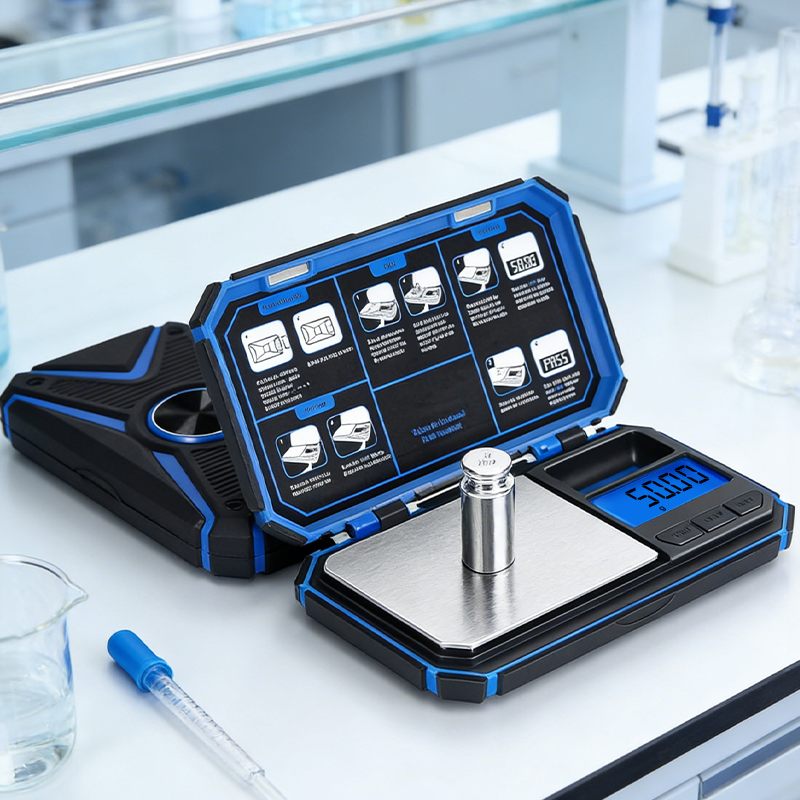
A mini balance with 0.001-gram resolution — equivalent to 0.005 carats — provides the measurement fidelity required for gemstone grading, precious metal verification, and laboratory sample preparation. At this precision level, even minor environmental factors affect readings: air currents from ventilation systems, vibration from nearby machinery, and temperature differentials between the sample and the weighing pan all introduce measurable error. High-quality balances address these through a protective windshield enclosure that shields the weighing chamber from drafts, a leveling adjustment with bubble indicator to ensure the load cell operates in its calibrated orientation, and a warm-up period of 30 to 60 seconds after power-on during which the internal electronics stabilize. The included calibration weight — typically 50 or 100 grams — enables field calibration to correct for drift caused by temperature changes and mechanical shock during transport.
A professional mini balance supports units that general-purpose scales omit: carats for gemstones, troy ounces and pennyweight for precious metals, grains for ammunition reloading and archery components. The ability to switch between these units eliminates manual conversion calculations that introduce error and slow workflow. Piece-counting functionality automates inventory tasks by calculating total item count from the weight of a known sample quantity. A 50-gram maximum capacity with 0.001-gram resolution balances the conflicting requirements of high precision and usable range — sufficient for individual gemstones, small jewelry components, laboratory powder samples, and coin authentication while maintaining the resolution necessary to detect sub-milligram discrepancies.
Modern mini balances combine laboratory precision with pocket-sized portability. Measuring approximately 14 by 9 by 4 centimeters and weighing under 300 grams, the balance fits in a protective travel case that doubles as a carrying solution for the calibration weight, tweezers, and weighing tray. The case's foam interior protects the sensitive load cell from impact during transport between jewelry shows, client meetings, and field appraisal locations. A backlit LCD display, typically orange or blue, maintains readability in the varied lighting conditions of trade show floors, retail counters, and basement workbenches. CE and RoHS certifications provide assurance of electrical safety and materials compliance for professional equipment.
Calibrate before each session of precision measurements, or at minimum weekly for balances in regular use. Temperature changes exceeding 5°C since the last calibration, mechanical shock from dropping or rough handling, and relocation to a different surface all require recalibration before use.
The minimum reliable weight is typically 10 to 20 times the readability — approximately 0.01 to 0.02 grams. Weighing items lighter than this threshold produces readings dominated by environmental noise rather than true sample weight. Use the included tweezers rather than fingers to handle samples, as skin oils add measurable mass.
Electronic components in the load cell and analog-to-digital converter drift slightly as they reach thermal equilibrium. A 30 to 60-second warm-up allows these components to stabilize at operating temperature, after which calibration and measurement produce consistent results.
Air currents — even imperceptible drafts from air conditioning, open windows, or a person walking past — exert force on the weighing pan that can register as several milligrams of apparent weight change. The shield creates a still-air environment around the pan, eliminating this source of measurement noise.
A carat is a unit of mass equal to 0.2 grams, used for gemstone weight. A karat is a measure of gold purity — 24 karat is pure gold, 18 karat is 75 percent gold. A mini balance measures carat weight; it does not determine karat purity.
Scales used for commercial transactions where price is determined by weight must meet legal metrology requirements such as NTEP certification in North America or NMI approval in Australia. Verify certification status before using a balance for trade purposes, as uncertified scales may not be legally acceptable for determining transaction value.

Shenzhen ACCT Electronics provides professional OEM/ODM electronic scales (pocket, kitchen, bathroom, postal) for global B2B clients. 20+ years’ experience, ISO9001 & CE/RoHS certified, 8M pcs/year capacity. Trusted by EU & NA partners. Request quote today.