EN
EN



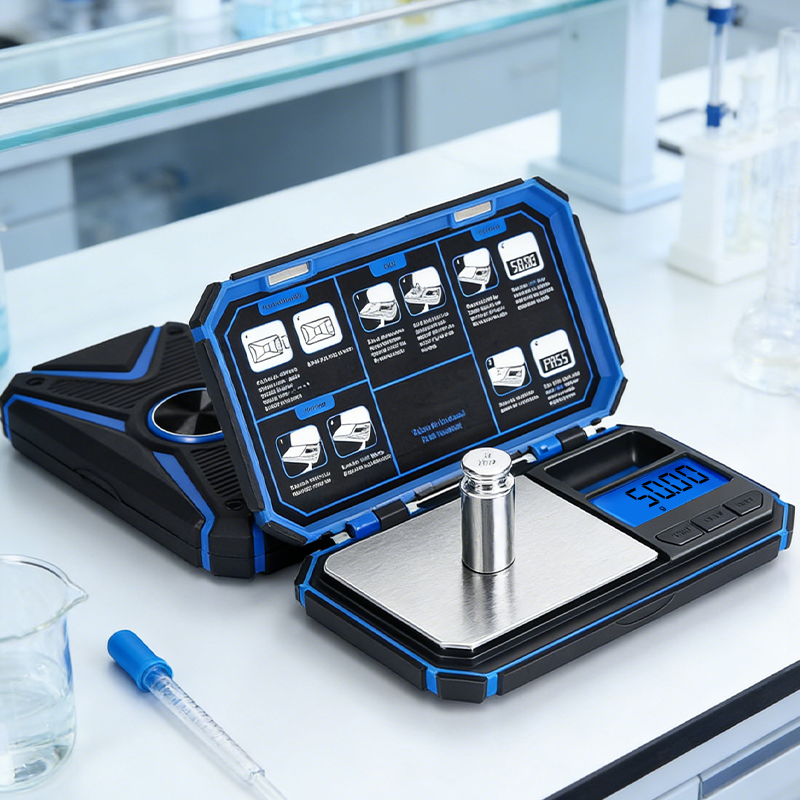
The readability of a portable digital scale refers to the smallest unit it can show on screen, like 0.01 grams or 0.1 grams, but this number doesn't automatically mean the scale is accurate. Take a scale rated at 0.1g readability - it displays weights to one decimal place, but if not calibrated properly, errors could actually be plus or minus 0.2g according to lab standards. For drug manufacturing where USP chapter 41 sets rules, getting down to 0.01g matters because tiny differences count when mixing medications. Most regular business needs though, such as figuring out shipping costs or measuring ingredients in bulk, work fine with just 0.1g precision. Different situations call for different levels of detail. Jewelers need those extra decimal places when assessing gold content, but someone collecting samples in the field might find 0.1g good enough. Larger scales tend to have coarser resolution too. A big 500g scale might only go down to 0.1g increments, while smaller 100g models can reach 0.01g. Getting the right balance between what's needed and what's available saves money and keeps measurements trustworthy for whatever job they're doing.
When talking about scales, repeatability and linearity matter just as much as how readable the display is. Repeatability basically means getting the same result every time we weigh something multiple times, usually within around 0.02 grams difference. This matters a lot in places like pharmacies where batches need to match exactly, or crime labs dealing with evidence samples. Then there's linearity which keeps things accurate throughout the whole weight range. Imagine a scale that works great for small items at 10 grams but starts giving off by 0.3 grams when measuring something heavier at 100 grams. That kind of error can mess up chemical formulas in research labs or lead to wrong valuations for gold and silver. Both these factors help fight against problems caused by changing temperatures affecting calibration settings. Most industries following strict regulations will want their equipment to meet certain standards during ISO 9001 inspections. The rules typically ask for repeatability below 0.05 grams and linearity no worse than plus or minus 0.1 percent of whatever measurement is taken. Equipment that doesn't hit these numbers runs into trouble meeting compliance requirements, even if the screen shows nice clear digits. Regular checkups inside the device plus special features designed to prevent drift are essential for avoiding these kinds of issues down the road.
In pharmaceutical labs, portable digital scales just can't be replaced when it comes to getting precise measurements. Labs must follow USP <41> standards pretty strictly. These standards set minimum weight requirements so drugs stay within safe therapeutic ranges. For this reason, most labs need scales that can read down to 0.01 grams accurately when measuring active ingredients in medications. Getting this wrong could put patients at risk and bring serious trouble from regulators. Another important aspect is keeping track of everything through proper documentation. Calibration records along with temperature and humidity data during testing help maintain FDA compliance and make inspections go smoother when they happen.
Precision matters a lot when it comes to valuing jewelry for both jewelers and gemologists. Modern portable digital scales can pick up on tiny differences in weight between diamonds and various gold alloys. When working with karat calculations, these professionals need scales accurate down to 0.001 grams so they can properly adjust values based on purity levels and meet those FTC packaging standards everyone has to follow. Just think about what happens if there's even a small error – something like 0.05 grams off in a 10 gram piece of gold could mean hundreds of dollars difference in valuation according to recent LBMA data from last year. That's why regular calibration using weights traceable back to NIST standards is absolutely essential. It helps avoid arguments over prices at the counter or later when dealing with insurance claims down the road.
Internal calibration makes life easier for regular maintenance tasks in places where conditions stay pretty much the same, like most labs. The automatic adjustments just keep things accurate without anyone needing to step in. But when it comes to really important work such as mixing medications, there's no getting around the need for external calibration using those special certified weights that can be traced back to NIST standards. This approach actually tests how well equipment performs against real world reference points, catching small changes over time that internal systems might miss completely. Research from last year in the field of measurement science found something interesting too. Scales that only used their own internal calibration drifted an average of 0.05 grams after about half a year. Meanwhile, those properly calibrated externally stayed within plus or minus 0.01 grams throughout the same period. Anyone working with external weights should stick to ISO/IEC 17025 guidelines, particularly if they're dealing with situations where audits will eventually come knocking on their door.
Ambient factors critically impact portable digital scale reliability. Temperature fluctuations exceeding 1°C/minute can induce thermal expansion errors of ±0.03g per 100g weighed. Drafts as mild as 0.2 m/s cause instability in sub-gram measurements—devastating for gem valuation. Best practices include:
Field studies show uncontrolled environments contribute to 42% of portable scale inaccuracies (Metrology Journal, 2024). For outdoor use—such as agricultural sampling—choose scales with built-in environmental compensation.
Beyond advertised precision, prioritize specifications that guarantee metrological integrity in dynamic environments. Calibration certificates traceable to national standards (NIST/ISO/IEC 17025) are non-negotiable for compliance-focused sectors like pharmaceuticals or gemology—where verification protocols demand documented proof of accuracy.
When choosing equipment capacity, go for something that's at least 50% higher than what's normally needed. This helps maintain accuracy when working near those important gram level points. Industry tests show going over 50% capacity can actually reduce precision by around plus or minus 0.5%. Environmental factors are just as important too. Sealed load cells along with proper IP ratings protect against dust and debris in real world settings. Temperature stability is another big factor. Good sensors will stay consistent within 0.01 grams even when temperatures swing between 15 and 30 degrees Celsius. If someone wants truly accurate lab results, they need to check actual test reports rather than just marketing materials. The top brands usually include validation data showing how their products perform regarding linearity and repeatability according to ISO 7500 standards.
Focus on engineering essentials:
Technical documentation transparency separates professional-grade instruments from consumer devices—demand full disclosure of measurement uncertainty before deployment.

Shenzhen ACCT Electronics provides professional OEM/ODM electronic scales (pocket, kitchen, bathroom, postal) for global B2B clients. 20+ years’ experience, ISO9001 & CE/RoHS certified, 8M pcs/year capacity. Trusted by EU & NA partners. Request quote today.