EN
EN



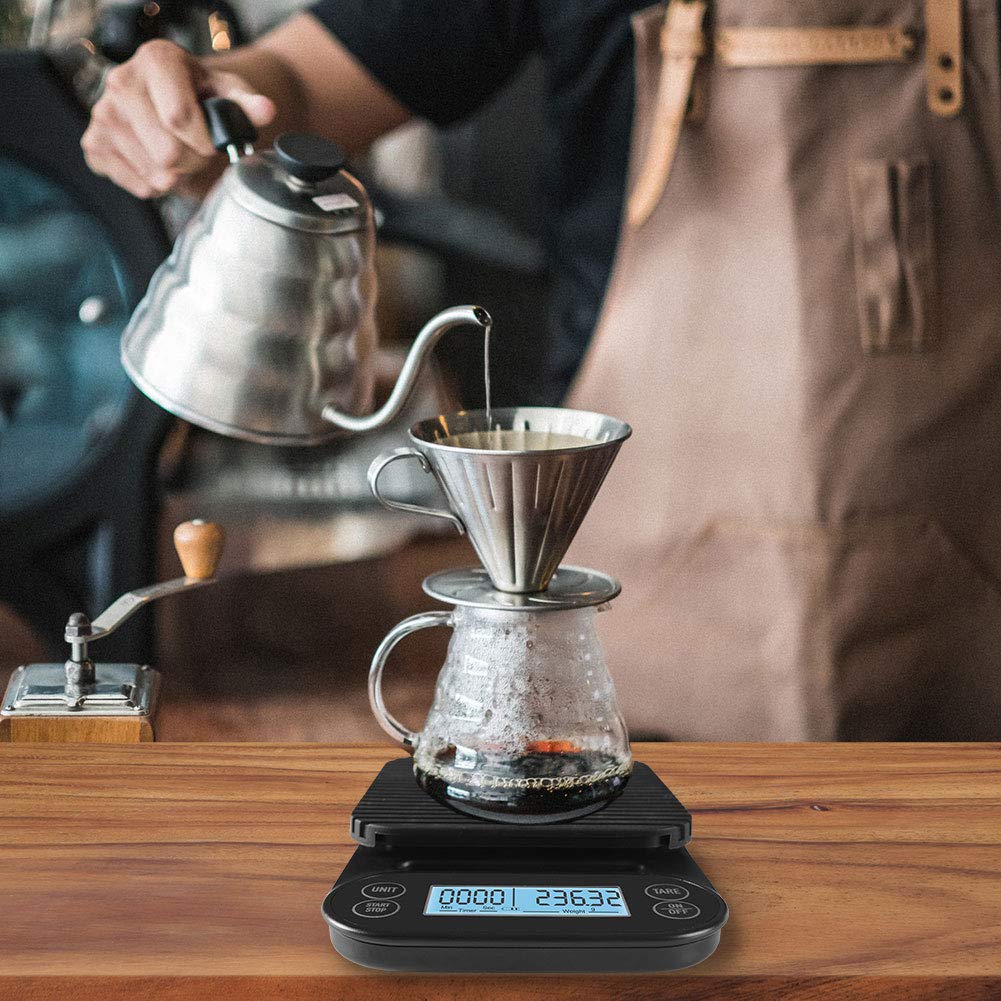
Precision in kitchen electronic scales directly impacts recipe outcomes. In baking, baker’s percentage uses flour weight as the 100% benchmark. A ±0.2g error when measuring 500g of flour introduces a 0.04% deviation—small in isolation, but it compounds across scaled ingredients, altering hydration ratios and dough texture. For espresso, the Specialty Coffee Association (SCA) mandates yield tolerances within ±0.5g. A 0.2g variance consumes 40% of that allowable margin, frequently pushing extraction outside the ideal 18–22% range. The result is inconsistent flavor balance and mouthfeel—under-extraction yields sourness and weakness; over-extraction brings bitterness and astringency.
Scales with 0.01g resolution exceed practical needs for most home users. Environmental variables—air currents, temperature shifts, and surface vibration—introduce more measurement variance than this level of precision can meaningfully resolve. Home bakers rarely weigh ingredients under 1g, where such resolution matters. Baristas benefit from 0.1g accuracy, which reliably delivers the ±1% dose precision required for repeatable shots. High-resolution models also exhibit slower stabilization times and significantly higher costs—without proportional gains in consistency or usability. For dual-use applications, 0.1g resolution remains the optimal threshold: precise enough to meet SCA and professional baking standards, yet robust, responsive, and cost-effective for daily use.
When a scale serves both baking and coffee brewing, its functionality must bridge two distinct workflows. Kitchen electronic scales that support seamless unit switching and deliver consistent, reliable tare performance become indispensable—not just conveniences, but foundational tools for accuracy and efficiency.
Baking recipes commonly specify weight in grams or ounces, while coffee preparation often calls for water volume in milliliters. Instant unit switching eliminates mental conversions and prevents misreading—especially critical when multitasking across tasks like dosing espresso grounds and scaling sourdough starters. In high-frequency use, this feature saves time and reduces cognitive load: a barista pulling back-to-back shots or a baker batching multiple loaves benefits from one-button toggling without breaking rhythm or repositioning containers. Top-performing models integrate this function into an intuitive, tactile interface—keeping hands free and attention focused on the process.
The tare function is engaged dozens of times per session, making its behavior mission-critical. Auto-tare scales zero automatically upon container placement—a boon for rapid additions like pouring beans into a brew basket. Yet manual tare buttons offer essential control when weighing sticky dough, wet batter, or dusty flour, where premature auto-zeroing risks false readings. For home bakers managing multiple batters or baristas calibrating dose-yield ratios mid-shift, reliability across repeated cycles matters more than automation alone. The most effective dual-use scales combine responsive auto-tare with a dedicated, tactile manual button—giving users deliberate control when needed, and speed when appropriate.
The ideal kitchen electronic scale must operate seamlessly within the spatial and environmental realities of modern kitchens—supporting stand mixers one moment and fitting beneath espresso group heads the next—without sacrificing stability or readability.
Dual-purpose scales face competing physical demands: espresso workflows require low-profile designs (≤3cm height) to fit under group heads, while baking demands platform stability for large mixing bowls. Compromises in either direction undermine usability. Leading models resolve this through weighted bases (≥500g mass) and recessed platforms—achieving optimal balance at ~20×15cm footprint with a 2.5cm containment lip. This accommodates standard 6-quart mixer bowls while maintaining clearance for most commercial and prosumer espresso machines. Vibration-damping feet further enhance stability, reducing measurement drift by 74% during motorized mixing, per independent culinary equipment testing.
Kitchen displays contend with steam, fine particulates, and appliance-induced vibration—conditions that degrade both legibility and longevity. IP65-rated sealing prevents moisture ingress during espresso steaming, while anti-static coatings repel flour dust during bulk scaling. Top-tier models feature 25mm high-contrast digits with adaptive brightness—addressing the 83% of users who reported readability issues in low-light or backlit environments. Shock-absorbing display modules maintain calibration amid typical 15Hz countertop vibrations from refrigerators or dishwashers. Industrial validation confirms silicone-sealed displays retain full functionality after 500+ steam exposures—well beyond expected residential service life.
Q: Why is 0.1g resolution important for kitchen scales?
A: A 0.1g resolution ensures precise measurements crucial for baking and espresso-making, where slight deviations can impact recipe outcomes, texture, and flavor consistency.
Q: Do I need a 0.01g resolution scale?
A: Generally, no. 0.01g resolution scales are often unnecessary for home use as environmental factors may exceed the measurement precision they provide.
Q: What key features should I look for in a dual-use scale?
A: Look for features like seamless unit switching (g/oz/ml), reliable tare functions (both auto and manual), compact yet stable design, and durable, readable displays.
Q: How can I ensure my scale remains accurate under various conditions?
A: Opt for a scale with vibration-damping feet, IP65-rated sealing against steam, and anti-static coatings to prevent dust interference.

Shenzhen ACCT Electronics provides professional OEM/ODM electronic scales (pocket, kitchen, bathroom, postal) for global B2B clients. 20+ years’ experience, ISO9001 & CE/RoHS certified, 8M pcs/year capacity. Trusted by EU & NA partners. Request quote today.